How Invisalign Aligners Move Teeth Step by Step
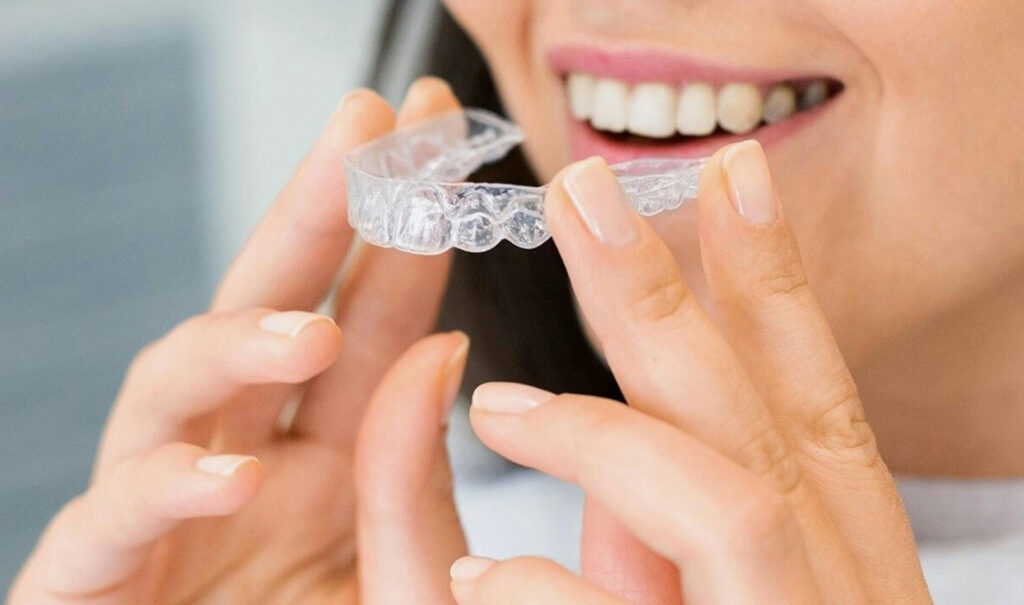
Anyone who has worn Invisalign for a few months learns the same thing quickly: the trays may look simple, but the biology behind them is not. Clear aligners do not just "push teeth into place" like a hand pressing books on a shelf. They work through a controlled sequence of tiny force applications, each one planned around how teeth, bone, ligaments, and bite relationships respond over time.
That distinction matters. People often expect dramatic movement from one tray to the next, then worry when they do not see much change after ten days. In practice, the system is deliberately incremental. Most trays are designed to move individual teeth fractions of a millimeter at a time, often around 0.1 to 0.25 millimeters per aligner depending on the movement. Rotation, tipping, extrusion, bodily movement, and root control all behave differently, and some are much harder to achieve than others. What looks like a thin piece of plastic is really a staged appliance, calibrated to apply pressure in very specific places.
Understanding the process makes the experience less mysterious and usually makes people better patients. It also explains why one case glides along and another needs attachments, refinements, elastics, or more time than expected.
The real engine of tooth movement
Teeth are not fused directly to bone. Each tooth sits in a socket and is suspended by a periodontal ligament, a network of tiny fibers between the root surface and the surrounding alveolar bone. When an aligner places pressure on a tooth, one side of that ligament compresses and the other side stretches. That pressure pattern signals bone remodeling. Bone resorbs on the pressure side and forms on the tension side. Over time, the tooth shifts into a new position.
This is the same broad biological principle behind braces, but the delivery system differs. Traditional braces apply force through brackets and wires that are adjusted over time. Invisalign uses a series of custom-made trays, each tray representing the next small step in the sequence. If the planning is sound and the trays are worn as directed, the teeth track from one stage to the next.
The key word is track. In orthodontics, tracking means the teeth are matching the positions predicted by the aligner stage. When they do not, the tray may feel loose in some areas, there may be visible gaps between the plastic and the edge of a tooth, or the next tray may not seat fully. This is why wear time matters so much. The biology needs time, and the tray needs enough hours in contact with the teeth to deliver its programmed force.
It starts long before the first tray
The movement process begins with records, not plastic. A clinician gathers digital scans or impressions, photographs, and usually radiographs. Those records reveal more than crowding. They show root positions, bone levels, the bite relationship, spacing patterns, missing teeth, existing dental work, and whether any teeth are impacted, restored, worn, or periodontally compromised.
That information shapes the treatment plan. Some cases are straightforward, such as mild crowding in an adult with healthy gums and a stable bite. Others are less forgiving. A tooth with a short clinical crown may need a different strategy for retention of the tray. A patient with gum recession may need gentler movements and closer monitoring. A deep bite, crossbite, open bite, or asymmetry can change the mechanics significantly.
Once the records are reviewed, the tooth movements are mapped digitally. This part often gets marketed as if software alone solves the case. In reality, software is a planning tool. It is only as good as the clinician's judgment. Experienced providers know that certain movements, while technically possible on screen, are less predictable in the mouth. They overcorrect some rotations, sequence difficult teeth carefully, add attachments where needed, and avoid asking too much from one stage.
The first stage, programming the sequence
Each Invisalign tray is built from the final plan in reverse, one small step at a time. Imagine a crowded lower incisor that needs to rotate and move slightly forward. Instead of trying to accomplish both changes at once in a big jump, the plan breaks the task into a series of tiny movements. The first tray may start unlocking the contact points and begin a slight rotation. The next several trays continue that rotation while managing space and angulation. Later trays may refine the root position and coordinate the bite with the opposing arch.
This staging is one of the most important parts of successful clear aligner treatment. A tray can only deliver a limited amount of force effectively. If a tooth is asked to rotate too far in one step, the aligner may flex around it instead of moving it. If the plan tries to expand an arch aggressively without enough control, the crowns may tip outward more than intended while the roots lag behind. The digital setup should respect biological limits and mechanical predictability.
Patients often ask whether every tray moves every tooth. Not necessarily. In many cases, certain teeth are used as anchors while others are active. Some trays focus on leveling, some on creating or closing space, some on bite settling, and some on detailing. You may not feel pressure on every tooth with every aligner because the system is selective.
When the tray goes in, what happens first
The moment a new tray is seated, it rarely fits passively. It fits the teeth as they are supposed to be at the end of that stage, not as they are at the beginning. That mismatch creates force. Usually the first day or two bring the most noticeable pressure, especially when switching into a new aligner at night and waking with the dull soreness that many patients describe as "tightness."
That soreness is not the tray cutting into the teeth. It is the ligament and supporting structures responding to orthodontic force. In healthy limits, that discomfort is expected. It tends to be milder than what many people remember from wire adjustments with braces, but experience varies. A person moving a single minor relapse may feel almost nothing. Someone correcting crowding, bite discrepancies, or multiple rotations may feel substantial pressure during certain stages.
The tray itself grips the teeth through its shape, and often through attachments. These small tooth-colored composite bumps act like handles or ramps. Without them, some movements would be unreliable. Rotating a rounded canine, extruding a tooth, or controlling root torque is much harder with smooth plastic alone. Attachments change how the aligner engages the tooth, helping direct the force in a more useful way.
Why some teeth move easily and others resist
Not all tooth movement is equal. Patients see a row of teeth. Orthodontists see different root shapes, crown shapes, bone envelopes, and mechanical challenges.
A broad, flat incisor can often be gripped more predictably than a rounded premolar. A single rooted tooth may behave differently from a molar with multiple roots. Teeth that are rotated sharply, especially round teeth like canines and premolars, often need more refinement than simple tipping movements. Extrusion, which means pulling a tooth slightly out of the gum and bone, tends to be more difficult with aligners than intrusion, which means pressing a tooth slightly inward. Bodily movement, where crown and root travel together, is harder than simple crown tipping. Root torque can be among the least forgiving movements if the aligner does not have enough leverage.
This is why two people with "crooked teeth" can have very different treatment experiences. One may finish in under a year with almost no refinements. Another may need additional scans halfway through because a couple of teeth are not tracking as planned. That does not necessarily mean something went wrong. It often means the biology responded a little differently than the simulation predicted.
Attachments, pressure points, and force control
A common surprise during Invisalign treatment is discovering that the trays are only part of the appliance. The full system may include attachments, interproximal reduction, elastics, bite ramps, or precision cuts. Each one serves a purpose.
Attachments are the most familiar. They help the tray hold onto certain teeth and translate force more effectively. In practical terms, they are often the difference between a tray nudging a tooth and actually controlling it. A patient might look at a digital simulation and assume the movement is happening because the tray is "tighter" on one side. Sometimes that is true. Often, the attachment is doing much of the real work.
Interproximal reduction, sometimes called IPR or enamel slenderizing, is another tool. This involves removing a very small amount of enamel between selected teeth, often a few tenths of a millimeter, to create space and improve contact shapes. Done conservatively and for the right reasons, it can reduce the need for arch expansion or extraction in certain mild to moderate crowding cases. Patients are understandably cautious about it, but when indicated it can be a precise and useful part of the plan.
Elastics are used when bite correction is needed, especially for certain Class II, Class III, or crossbite mechanics. Many adults hope clear aligners mean no "extra gear," but bite correction often depends on more than the trays themselves. A patient who wears trays faithfully but ignores elastics may find the front teeth looking straighter while the bite remains unfinished.
The role of wear time, which is bigger than most people think
If there is one factor that separates smooth Invisalign cases from frustrating ones, it is wear time. Most protocols call for around 20 to 22 hours a day. That is not a vague suggestion. It reflects how long the tray needs to engage the teeth consistently enough for the stage to complete.
People are often tempted to think of wear time in daily averages. The biology does not always cooperate with that logic. Wearing trays 14 hours one day and 24 the next is not the same as wearing them 21 hours both days. Teeth can rebound slightly when aligners are out, especially early in treatment or after more active stages. Repeated long gaps make each tray spend part of https://medium.com/@omnidentalspecialty/about its working life redoing lost progress instead of advancing the next movement.
A pattern I have seen repeatedly is the patient who says, "I wear them almost all the time," but changes aligners every week despite inconsistent use. Around tray eight or ten, the fit starts looking imperfect around the canines or incisors. Then the next tray is harder to seat, chewies become a daily ritual, and eventually the case needs midcourse correction. This is not unique to Invisalign, but clear aligners make compliance more central because the appliance is removable.
Why movement happens step by step, not all at once
The staged nature of Invisalign is not just about comfort. It is about force quality and tissue response. Teeth move safely when the applied force is controlled and the surrounding bone has time to remodel. Large, abrupt movements risk poor tracking, root stress, discomfort, and biologic slowdown.
Each aligner is therefore a small chapter rather than a dramatic event. If a patient starts with 24 trays, that does not mean 24 random pieces of plastic. It means 24 planned micro-transitions. One tray may slightly derotate a lateral incisor. Another may hold that correction while opening a fraction of a millimeter of space nearby. A later tray may begin settling the bite as those front teeth finish aligning.
This stepwise progression also explains why treatment can look slow in the mirror until suddenly it looks obvious. Small changes accumulate. The first six trays may mostly create room and improve angulation. The visible crowding may not seem dramatically different. Then over the next six, the front teeth begin to line up quickly because the groundwork has already been laid.
Refinements are common, and that is not a failure
One of the most misunderstood parts of Invisalign treatment is refinement. Patients often think the first set of trays should complete everything exactly as shown in the initial animation. Sometimes that happens. Often it does not, especially in more involved cases.
Refinement means taking new scans near the end of the initial series and fabricating additional aligners to fine-tune the result. This may address small rotations, contact discrepancies, black triangles, midline adjustments, bite settling, or teeth that lagged slightly behind the programmed position. In experienced hands, refinements are part of realistic treatment planning, not a sign of incompetence.
The reason is simple. Teeth are living structures in living bone. A digital plan is an informed forecast, not a guarantee. If one canine rotates 85 percent of the way but not 100 percent, the most sensible next step is usually to rescan and finish precisely rather than forcing ahead with ill-fitting trays.
I often tell patients to view the first series as the main movement phase and the refinement phase as the finishing work. It is similar to carpentry. Framing sets the shape, but careful finishing determines how polished the final result feels.
What a patient usually notices at each point
The sensory experience of Invisalign tends to follow a pattern. New trays feel snug. Pressure peaks early, then fades. Speech may change for a day or two, especially with attachments or bite ramps. Trays feel easier by the end of the wear interval. Then the cycle resets with the next set.
There are also visual milestones. Early in treatment, people often notice spaces opening in places they did not expect. That can be disconcerting. They may think the teeth look worse before they look better. In truth, strategic spaces are often created intentionally so crowded teeth can unravel and rotate into position. Those spaces are usually temporary and planned.
Another milestone is the point where front teeth begin to appear straighter, but the bite still feels odd. That is also common. Cosmetic alignment and functional bite correction do not always finish on the same schedule. In fact, if the bite were "perfect" at every interim stage, it could interfere with later movements.
Cases that need extra judgment
Clear aligners are versatile, but they are not identical in performance across every type of case. Severe skeletal discrepancies, large vertical issues, impacted teeth, heavily restored dentitions, active periodontal disease, and complex extraction mechanics all require careful evaluation. Many can still be treated with Invisalign, often very successfully, but the plan becomes more nuanced.
Adults present another layer of complexity. They may have wear facets, crowns, implants, missing teeth, recession, or previous orthodontic relapse. An implant, for example, does not move orthodontically, so it becomes a fixed landmark that the rest of the treatment must respect. A tooth with a large crown may need a different attachment strategy than natural enamel. A patient who clenches may distort trays faster and need closer follow-up.
These details rarely show up in social media before-and-after posts, but they are exactly where clinical experience matters.
Retention is part of movement, not an afterthought
Once the final tray comes off, the teeth are not magically locked in place. The periodontal ligament and surrounding bone need time to stabilize around the new positions. There is also a natural tendency for some teeth, especially those that were rotated or severely crowded, to relapse if retention is inconsistent.
This is why retainers are not optional if the goal is to keep the result. The irony of orthodontics is that moving teeth is only half the job. Holding them there matters just as much. The same biology that allowed change can allow rebound. Patients who were disciplined through 18 months of treatment sometimes relax at the very moment that consistency still matters.
A retainer should feel boring. That is a good sign. It means the active work is over and the result is being protected.
What makes Invisalign successful
The best Invisalign cases are rarely the most glamorous ones on paper. They are the cases where diagnosis was careful, movement staging was realistic, the patient wore the trays properly, and the team responded early when tracking drifted. The plastic itself is only one piece of the system. Success depends on how well the digital plan, the biology, and the day-to-day behavior all line up.
Clear aligners move teeth step by step because that is how teeth can move safely and predictably. One controlled increment leads to the next. Pressure alters the ligament response, bone remodels, teeth shift, the next tray takes over, and the sequence continues until the planned positions are reached. When people understand that rhythm, they stop expecting miracles from a single tray and start appreciating the precision of the process.
That perspective helps with patience, and patience is a real asset in orthodontics. Teeth do move. They simply do it on biological time, one measured step at a time.
Omni Dental Specialty
Address: 1690 E Gonzales Rd, Oxnard, CA 93036
Phone number: +18053666000
FAQ About Invisalign
How much does Invisalign actually cost?
The out-of-pocket cost for Invisalign typically ranges between $3,000 and $8,000, with most patients paying a national average of roughly $5,100 to $5,700 before insurance.
What is the downside to Invisalign?
The biggest downsides to Invisalign are the intense discipline required to wear the trays 22 hours a day, the inconvenience of removing them to eat or drink, and the inability to fix severe, complex orthodontic issues.
Is $5000 a lot for Invisalign?
No, $5,000 is not considered a lot for Invisalign; it is exactly the national average. Treatment costs typically fall between $3,000 and $8,000, and $5,000 is the standard fee for a moderately complex case that takes 6 to 18 months to complete.