Can Invisalign Work for Complex Cases?
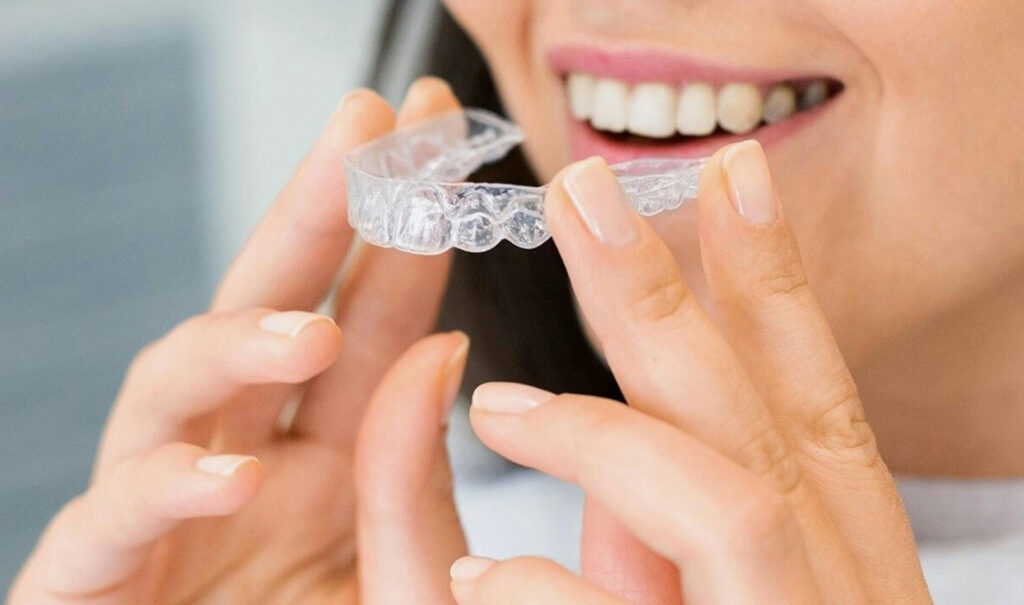
For years, clear aligners were treated as the mild-misalignment option, useful for minor crowding, small gaps, and touch-up work after braces. That view is outdated. Invisalign has advanced well beyond its early role, and in the right hands it can manage a surprising range of difficult orthodontic problems.
That said, the honest answer to the question in the title is not a clean yes or no. Invisalign can work for many complex cases, but not every case, and not with every provider. Success depends on diagnosis, planning, patient compliance, tooth biology, and the willingness to use additional tools when aligners alone are not enough.
Patients often come into a consultation with one of two assumptions. Some believe clear aligners can now do everything braces can do. Others assume that if their teeth are significantly crooked, they are automatically disqualified. Both positions miss the nuance. Complex orthodontic treatment lives in the gray area, and good treatment planning is about understanding where aligners are strong, where they struggle, and how to compensate.
What counts as a complex case?
In everyday practice, a complex case usually means more than a little crowding or a cosmetic front-tooth issue. Complexity may involve the bite, jaw relationships, impacted teeth, missing teeth, asymmetry, significant rotations, deep bites, open bites, crossbites, or cases where teeth need to move a long distance in a controlled way.
A patient with upper and lower crowding of 8 to 10 millimeters, for example, is not in the same category as someone with a small lower incisor overlap. A person with a posterior crossbite and mandibular shift presents a different challenge than a patient who simply wants to close a small space between the front teeth. Likewise, adults who have had previous dental work, gum recession, bone loss, or worn teeth add layers of complexity that have little to do with how straight the smile looks in a photograph.
Orthodontists and experienced Invisalign providers also think in terms of biomechanics. Some movements are inherently more difficult with removable plastic trays than with fixed braces. Extruding teeth, correcting severe rotations of round teeth like canines or premolars, translating roots through dense bone, and controlling torque can all be demanding. That does not make them impossible, but it does mean they require more sophistication in planning and often more patience from the patient.
Why Invisalign has become more capable
The reason Invisalign can now treat cases that once would have gone straight to braces comes down to several improvements. The software is better, attachment design is better, material properties have improved, and clinicians understand aligner biomechanics far more deeply than they did fifteen or twenty years ago.
Attachments are a good example. To a patient, they may look like tiny bumps of composite on the teeth. To a clinician, they are handles. They help the aligner grip a tooth and deliver more specific force. Properly placed attachments can make the difference between a tooth tipping loosely and a tooth moving in a more controlled, predictable manner.
Interproximal reduction, often called IPR, also plays a practical role. In cases with crowding, removing a fraction of a millimeter of enamel between selected teeth can create enough space to avoid broader compromises. This is not a shortcut and it is not used casually, but in skilled hands it can be conservative and effective.
Then there are auxiliaries. Modern Invisalign treatment often includes elastics, buttons, bite ramps, precision cuts, staged expansion, and carefully sequenced refinements. Once patients understand that clear aligner therapy for complex cases may involve more than just “wear the trays,” they get a more realistic picture of what advanced treatment actually looks like.
The cases Invisalign often handles well
One of the most satisfying things in practice is seeing a patient who assumed they needed braces discover that aligners are a viable option. Moderate to significant crowding can often be treated effectively. Deep bites in adults may respond very well when the plan is designed carefully, especially when incisor intrusion and posterior control are staged thoughtfully. Some open bites, particularly dental open bites rather than major skeletal ones, also respond impressively with aligners because the trays can help manage posterior eruption and vertical dimension.
Crossbites can sometimes be addressed successfully as well, especially if the discrepancy is dental rather than skeletal. Invisalign can also be quite useful in pre-restorative cases, where teeth need to be repositioned before veneers, implants, or other restorative treatment. In adults with worn dentition, this can be one of the strongest indications for aligner therapy because the orthodontic and restorative planning can be coordinated very precisely.
Relapse cases deserve mention too. Many adults had braces as teenagers, stopped wearing retainers, and now present with a combination of crowding, bite changes, and aesthetic concerns. These cases can range from simple to surprisingly involved, but aligners are often an excellent fit because the patient values appearance and already understands what orthodontic treatment requires.
Where Invisalign still has limits
There are still situations where braces remain the more predictable tool. That is not a failure of Invisalign. It is simply a matter of choosing the appliance that gives the best control.
Severe skeletal discrepancies are a major example. If the underlying issue is jaw position rather than tooth position, aligners alone cannot solve it. A pronounced underbite, a major overjet caused by skeletal pattern, or a significant facial asymmetry may require growth modification in younger patients or orthognathic surgery in adults. Invisalign may still be part of the treatment, but it is not the whole answer.
Teeth that are heavily rotated can be stubborn with aligners, especially if the crown shape does not allow the tray to grip efficiently. Impacted teeth usually need a different approach if they must be surgically exposed and orthodontically guided into position. Cases with severe periodontal compromise also demand caution. Teeth can be moved only within biologic limits, and adults with reduced bone support need especially careful force control and realistic goals.
Even in less dramatic cases, some movements simply track better with braces. When a provider recommends braces over Invisalign, it does not automatically mean the case is too complicated. It may mean the planned mechanics are more straightforward, more efficient, or more reliable with fixed appliances.
The difference between “possible” and “predictable”
This is the point patients often miss, and it matters. Many things are technically possible in orthodontics. The real question is what can be achieved predictably, safely, and within a reasonable timeframe.
A simulation on a screen can make almost any smile look perfect. But digital treatment planning is only a proposal. Teeth are attached to bone by a living ligament. Some move quickly, others lag. Some track beautifully with aligners, others stop seating fully and need course correction. Biological variation is real, and complex cases expose that reality more than simple ones do.
This is why refinements are so common in advanced Invisalign treatment. Refinements are not necessarily a sign that something went wrong. They are often part of good care. An experienced provider expects that a difficult case may need additional scans, new trays, and small adjustments to finish the bite properly. Patients who expect a one-and-done set of aligners for a major malocclusion are usually disappointed. Patients who understand that treatment may unfold in phases tend to do much better.
Provider experience matters more than the brand name
Patients sometimes shop for Invisalign as if it were a product sitting on a shelf. It is better to think of it as a treatment system that depends heavily on the person designing and managing it.
Two providers can look at the same patient and create very different plans. One may stage movements too aggressively, fail to manage anchorage, skip important attachments, or accept a compromised bite. Another may use the same platform to produce a stable, functional result. The aligners are manufactured from a digital prescription. If the prescription is weak, the trays will faithfully deliver a weak plan.
In complex cases, provider experience becomes even more important because the margin for error is smaller. Sequencing matters. Overcorrections matter. Knowing when to use elastics, when to pause, when to rescan, and when to switch strategies matters. So does the ability to recognize when the best answer is not Invisalign at all.
A useful consultation is one where the clinician explains not just what they plan to do, but why. If a case involves expansion, extractions, distalization, bite correction, or interdisciplinary work with a periodontist or restorative dentist, the reasoning should be clear. Patients do not need a lecture in biomechanics, but they do deserve more than “yes, you’re a candidate.”
Compliance is not a small detail
Complex Invisalign cases demand excellent wear habits. That is the bargain. Patients choose a removable appliance because they value comfort and appearance, but that same removability creates risk. If aligners are not worn close to full-time, the plan loses traction quickly.
In straightforward cases, a patient may get away with some inconsistency and still arrive at an acceptable result. In more difficult cases, poor compliance shows up fast. Teeth stop tracking. Trays stop fitting fully. Attachments pop off and are not replaced promptly. Elastics are worn sporadically. Mid-course corrections become more frequent, and treatment time drifts.
Most providers advise aligner wear in the range of 20 to 22 hours per day. For some patients, that feels manageable from the start. For others, especially those with unpredictable work schedules or frequent social eating, it is harder than expected. I have seen highly motivated adults do beautifully with a complex Invisalign plan because they treated it like a real medical commitment. I have also seen seemingly ideal candidates lose months because they underestimated how disciplined the process would need to be.
When patients ask whether Invisalign works, I often find myself asking whether they can realistically live with it. That question is just as important as the orthodontic diagnosis.
Attachments, elastics, and other things patients are surprised by
Marketing has trained many people to picture Invisalign as a nearly invisible tray with no other visible features. That image is incomplete. In complex treatment, clear aligners often come with visible attachments on several teeth. Rubber bands may be needed. Precision cuts may be placed in the trays. Temporary bite changes can occur as the bite settles.
None of this is a problem, but it should be discussed upfront. If a patient’s main reason for choosing Invisalign is that they do not want anything noticeable at all, advanced treatment can come as a surprise. The trays are still more discreet than traditional braces in many situations, but “discreet” and “invisible” are not the same.
There is also a comfort issue. Aligners are generally well tolerated, and most adults find them easier on the cheeks and lips than brackets and wires. But complex cases can involve more attachments and stronger mechanics, which can make insertion and removal feel challenging at times. Soreness after tray changes is common, especially early on or after a refinement phase restarts active movement.
How long treatment usually takes
Treatment time for complex Invisalign cases varies widely. Mild cosmetic cases may finish within six to nine months. More involved cases often run 18 to 30 months, sometimes longer if bite correction is substantial or if multiple refinement phases are needed.
That timeline can be frustrating for patients who chose Invisalign partly because they heard it was faster. Sometimes it is. Sometimes it is not. Efficiency depends on the tooth movements required and how faithfully the patient wears the aligners. If a case needs deep bite correction, arch development, space management, root control, and detailed finishing, time is part of the biology.
There is also a practical reality here. Braces can keep working even on days when the patient is not thinking about them. Invisalign works only when it is in the mouth. That https://www.google.com/maps?cid=2377252397395601081 difference alone can influence total treatment length in a major way.
Adults, teens, and interdisciplinary cases
Adults often make excellent Invisalign candidates, even for difficult cases, because they are motivated and careful. At the same time, adult treatment comes with special considerations. Existing crowns, implants, gum recession, missing teeth, clenching habits, and age-related wear can complicate mechanics. Implants do not move orthodontically, so the teeth around them must be planned with that in mind. Periodontal health must be monitored closely. In some adults, the bite has adapted over decades, and changing it requires restraint and precision.
Teenagers can also do well, particularly when aesthetics are a major concern, but compliance is more variable. A teen who loses trays, forgets wear time, or leaves aligners out during sports and meals may not be the best candidate for a demanding case. Sometimes braces are simply more practical.
One area where Invisalign has become especially valuable is interdisciplinary care. A patient may need orthodontics before implant placement, before restorative build-ups, or before periodontal procedures. Aligners fit neatly into these treatment sequences because they allow digital planning and are often easier to coordinate with other dental work. In these settings, “complex” may mean the entire dental picture is complex, not just the alignment.
Signs that a case needs a careful second opinion
Not every consultation is equally thorough. If a provider brushes off a severe bite issue as a simple cosmetic alignment problem, that is worth pausing over. The same is true if no one examines the gums, discusses roots and bone, or explains how the bite will function when treatment ends.
A second opinion can be especially valuable if extractions are being considered, if jaw surgery has been mentioned, if there are impacted teeth, or if the patient has had relapse after prior orthodontic treatment. These are not routine decisions. They deserve thoughtful planning.
Patients should also be cautious about promises of perfect outcomes on unusually short timelines. Complex orthodontics is not instant dentistry. Good treatment can be efficient, but it is rarely rushed.
What a realistic conversation sounds like
A realistic Invisalign consultation for a complex case usually includes some version of the following: yes, aligners may work; no, the process may not be simple; attachments and elastics may be necessary; refinements are likely; and the final decision should be based on predictability, not just preference.
That kind of conversation may feel less glamorous than a sales pitch, but it is a good sign. Honest providers do not oversimplify treatment. They explain trade-offs. Braces may offer tighter control in one case, while Invisalign may provide enough control with better aesthetics and easier hygiene in another. The right choice is not ideological. It is clinical.
I remember one adult patient with significant lower crowding, a deep bite, and an old crown on an upper incisor that complicated aesthetics. She was convinced braces were her only option and had delayed treatment for years because of it. After a careful review, aligners were a reasonable path, but only with attachments, bite ramps, and the expectation of at least one refinement. She accepted that trade-off, wore her trays meticulously, and finished with a markedly improved bite and smile. Another patient with a severe skeletal discrepancy wanted the same answer, but the honest recommendation was a different one because aligners alone would have camouflaged the problem rather than solving it. Both consultations were successful because the treatment matched the diagnosis.
So, can Invisalign work for complex cases?
Yes, often it can. But the fuller answer is that Invisalign works best for complex cases when the diagnosis is sound, the provider is experienced, the patient is consistent, and the goals are grounded in biology rather than wishful software animations.
For many patients, clear aligners are no longer limited to minor cosmetic fixes. They can address meaningful crowding, bite issues, relapse, and multidisciplinary treatment needs with impressive precision. At the same time, some cases still belong in braces, and some problems require more than orthodontics alone.
The smartest way to approach Invisalign is not to ask whether it is modern enough or popular enough. Ask whether it is the most predictable tool for your specific problem. That is where good orthodontic care starts, and where the best results usually follow.
Omni Dental Specialty
Address: 1690 E Gonzales Rd, Oxnard, CA 93036
Phone number: +18053666000
FAQ About Invisalign
How much does Invisalign actually cost?
The out-of-pocket cost for Invisalign typically ranges between $3,000 and $8,000, with most patients paying a national average of roughly $5,100 to $5,700 before insurance.
What is the downside to Invisalign?
The biggest downsides to Invisalign are the intense discipline required to wear the trays 22 hours a day, the inconvenience of removing them to eat or drink, and the inability to fix severe, complex orthodontic issues.
Is $5000 a lot for Invisalign?
No, $5,000 is not considered a lot for Invisalign; it is exactly the national average. Treatment costs typically fall between $3,000 and $8,000, and $5,000 is the standard fee for a moderately complex case that takes 6 to 18 months to complete.